


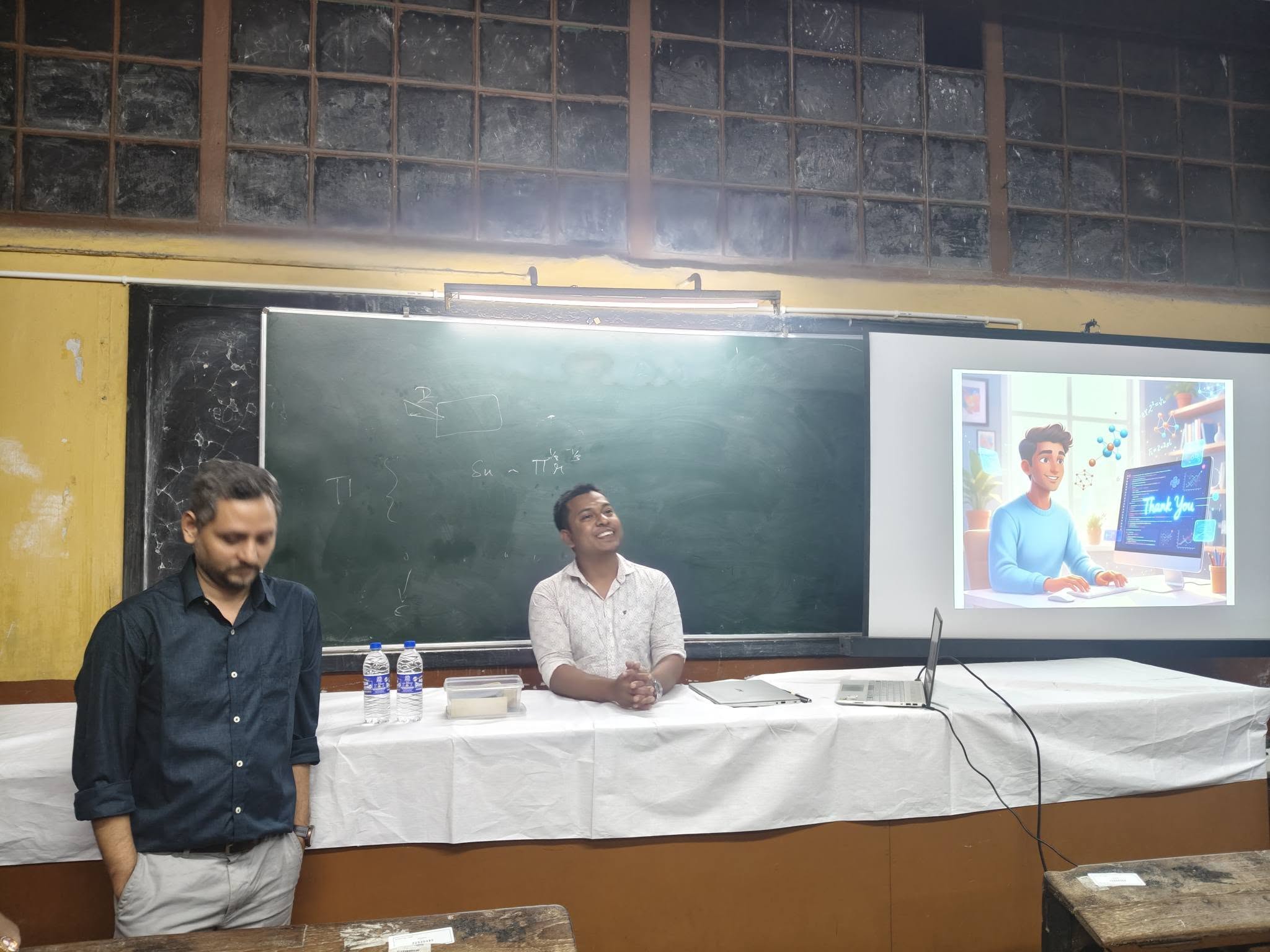
Celebrando La Fisica 2.0 (18/12/2025)
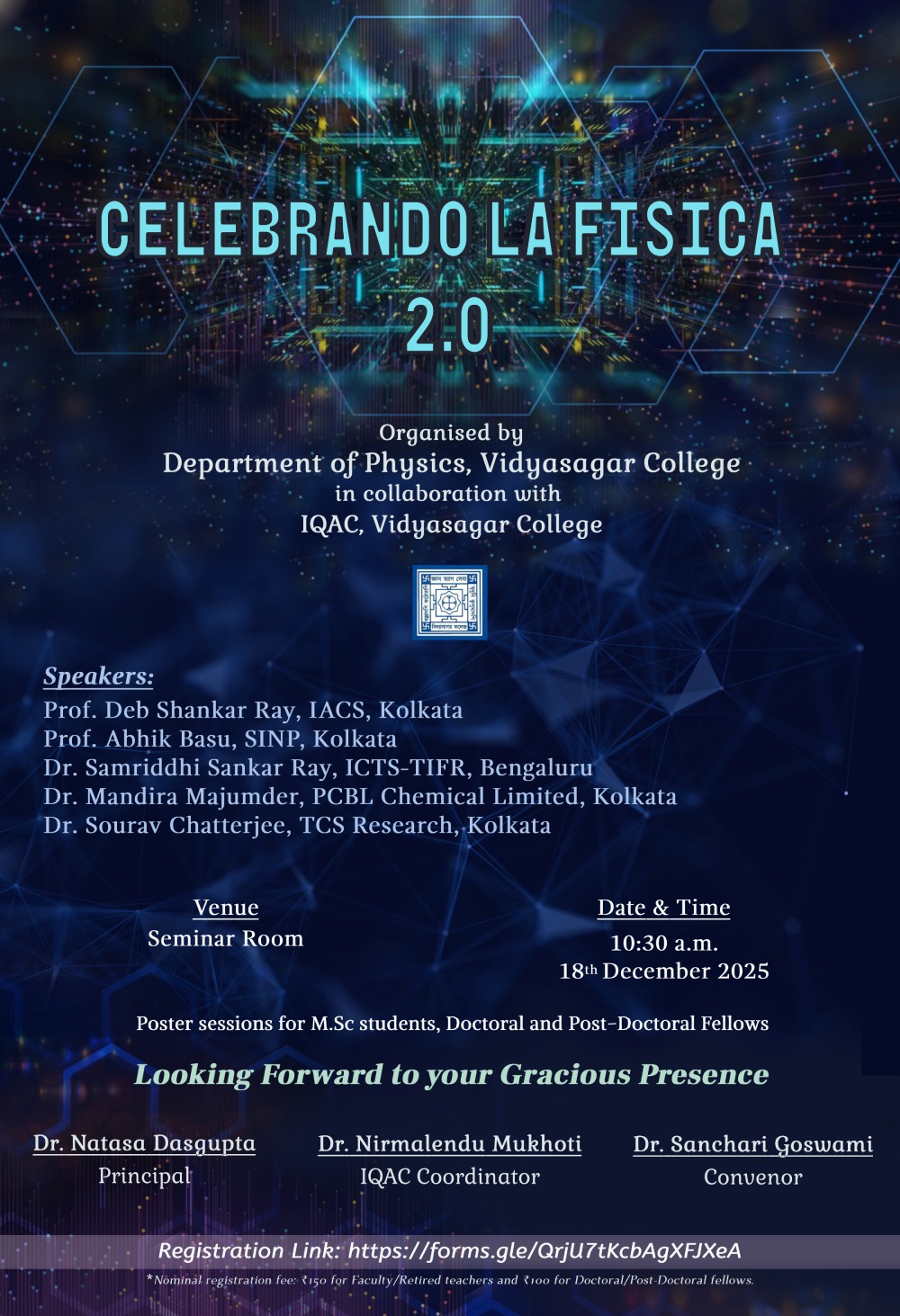
Organised by Department of Physics, Vidyasagar College, Kolkata
Venue : E Room, Vidyasagar College
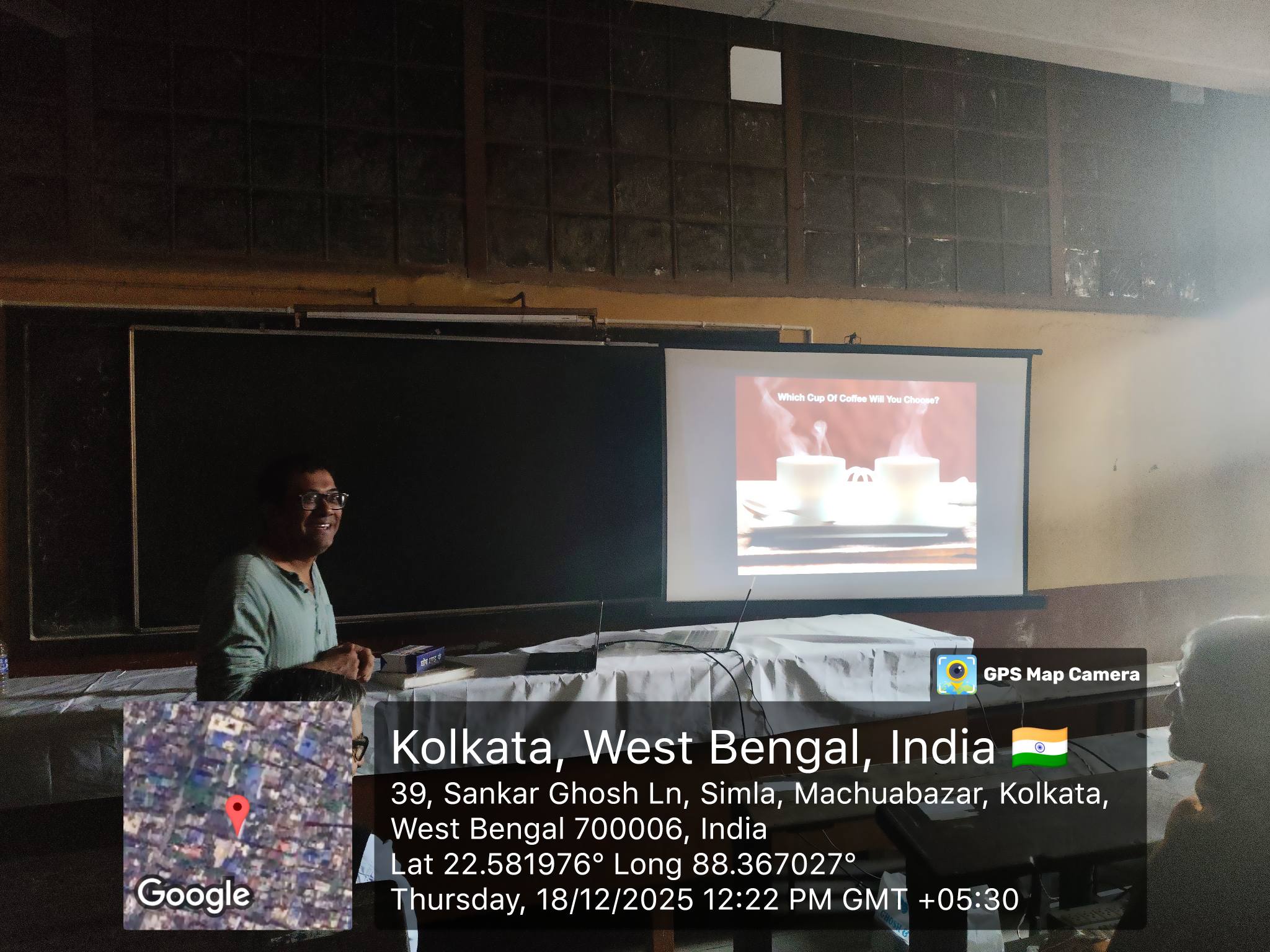
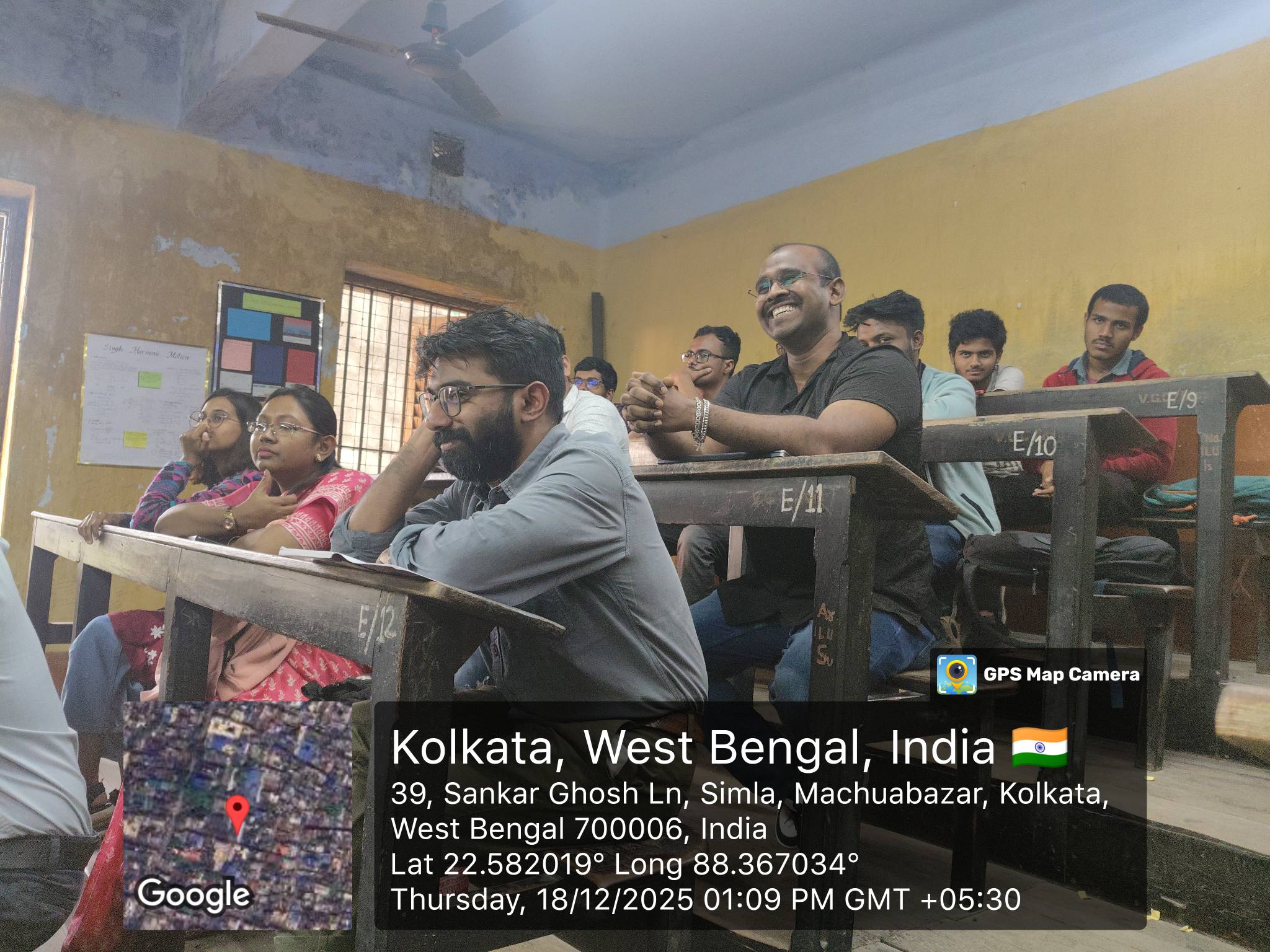
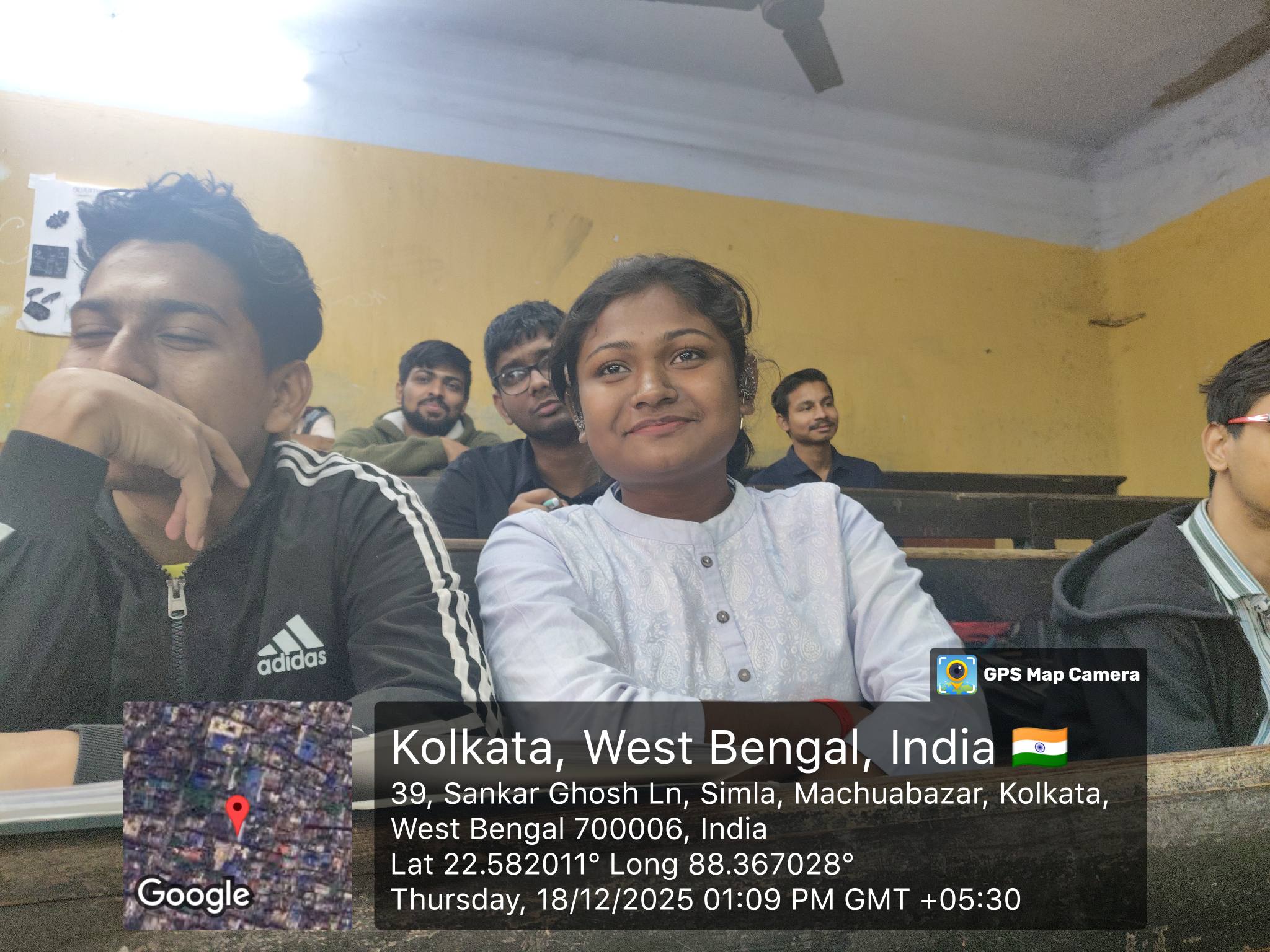
Celebrando La Fisica 2.0, a one day National Level Seminar series organised by Department of Physics, Vidyasagar College in collaboration with IQAC, was held on 18th December, 2026. Renowned Physicists from Esteemed Institutions as well as industry persons were brought together to uplift young minds.
Last year it was held on 13th December, 2025 and almost the same format is maintained this year also.
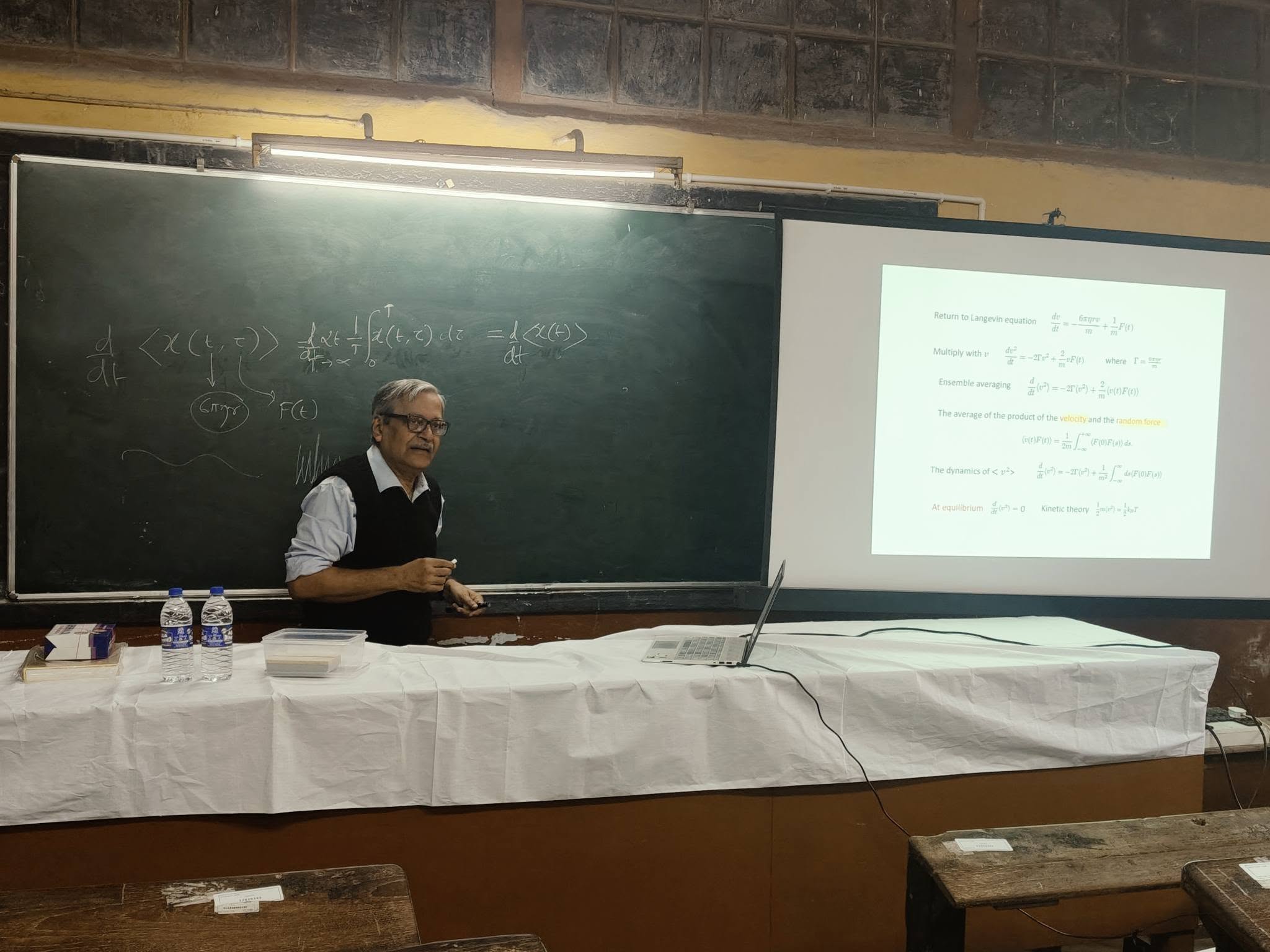
Deb Shankar Ray
Emeritus Professor, IACS, Kolkata
Title :Brownian motion: Classical vs Quantum
Abstract :The observation of irregular movement of pollen grains in watermore than two centuries ago was investigated by Einstein in 1905.Since then, the theory of Brownian motion had come a long waythrough the work of Langevin, Fokker, Planck, Smoluchowskii,Kramers and Chandrasekhar and others to understand variousnatural phenomena ranging from coagulation of colloids, chemicalreaction rate to distribution of stars in galaxies. This development haspaved the foundation of non-equilibrium statistical mechanics. Weintend to discuss some basic aspects of classical and quantumBrownian dynamics.
Abhik Basu
Professor, SINP, Kolkata
Title: Correlations and order in two dimensions
Abstract: Correlations and order are central to the subject of statisticalmechanics and condensed matter physics. We will discuss the possiblenature of order and associate phase transitions in two-dimensional systemswith continuous symmetries. We will focus on how these differ from theusual order-disorder transitions we usually study in thermodynamics. Wewill end by briefly discussing the Kosterlitz-Thouless transition in thetwo-dimensional XY model.
Samriddhi Sankar Ray
Associate Professor, ICTS-TIFR, Bengaluru
Title: Why are turbulent flows fascinating in the 21st century?
Abstract:Turbulent flows are commonplace in nature. And yet, since Euler wrote down his equation
for ideal fluids, the problem remains "unsolved". In this talk I will give an introduction
to turbulence in the language of statistical physics. If time permits, I will then discuss some
recent results which borrow ideas from many-body physics and solve an old problem: How does
the chaotic behaviour of turbulence --- measured through its Lyapunov exponent ---- scale
with the intensity of turbulence (measured through its Reynolds number).
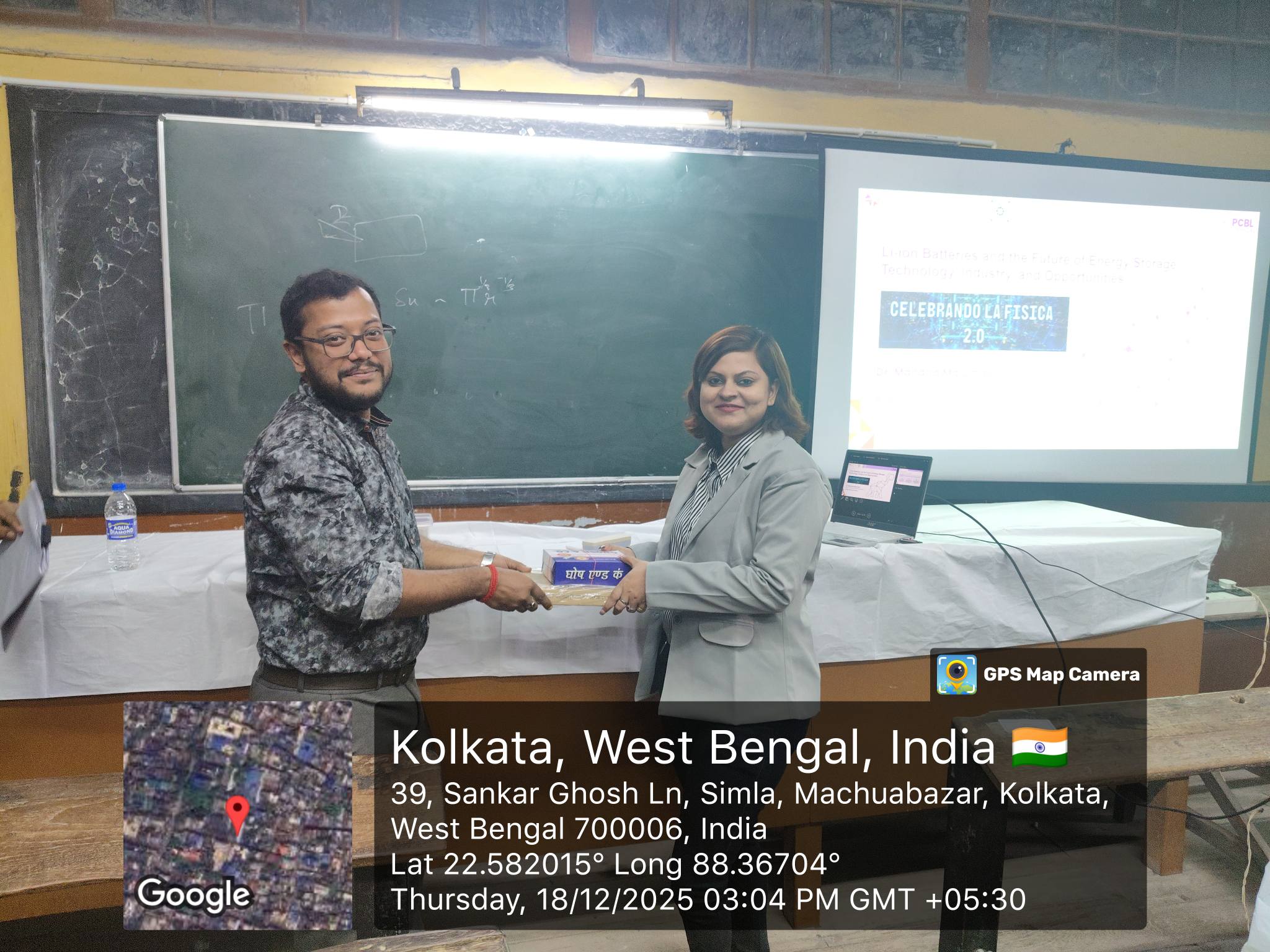
Mandira Majumder
Deputy Manager, PCBL Chemical Limited, Kolkata
Title : Li-ion Batteries and the Future of Energy Storage: Technology, Industry, and Opportunities
Abstract :Lithium-ion (Li-ion) batteries represent the vanguard of electrochemical energy storage, enabling the electrification of transportation and the stabilization of intermittent renewables. This talk elucidates core technologies, including cathode innovations (e.g., high-nickel NMC and LFP variants), anode advancements (silicon-graphite blends and lithium metal), and emerging paradigms like solid-state electrolytes that enhance energy density to 400+ Wh/kg, power output, and safety via suppressed dendrite formation and reduced flammability.
Industrially, the sector's exponential growth—projected to surpass 3 TWh annual capacity by 2030—faces bottlenecks in critical minerals, prompting circular economy strategies and geopolitical shifts toward domestic supply chains. Key metrics underscore viability: levelized cost of storage (LCOS) dropping below $0.10/kWh for grid applications, alongside recycling yields exceeding 95% for lithium and cobalt. Notably, PCBL Chemical Limited is poised to provide a comprehensive product platform, including acetylide blacks, high surface area carbon black, and silicon-based anode materials, to boost conductivity, capacity, and cycle life in next-gen cells.
Opportunities abound in R&D commercialization, from sodium-ion for stationary storage to Li-S and metal-air for aviation, alongside policy incentives like the U.S. IRA and EU Battery Regulation. Attendees will gain insights into scalable pathways for decarbonization, investment theses, and technological roadmaps shaping a terawatt-hour era.
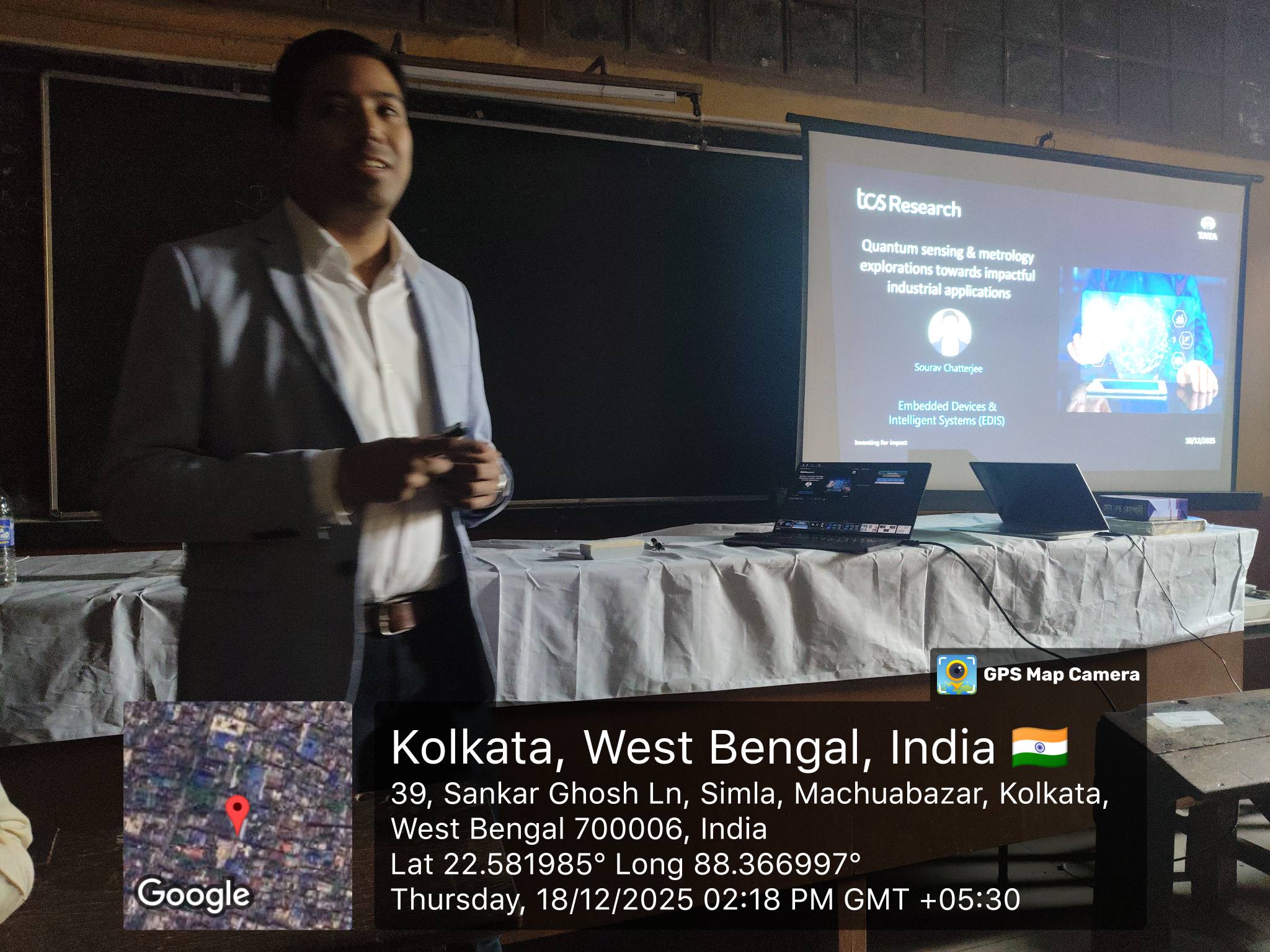
Dr. Sourav Chatterjee
Scientist, TCS-Research, Kolkata
Title:Quantum sensing & metrology explorations at the cusp of the 2nd quantum revolution
Abstract:In this international year of quantum science and technology (IYQ 2025), we mark a significant milestone in this second quantum revolution, where technology horizontals like quantum sensing and metrology are beginning to transform a multitude of technology verticals. In the first (metrology) part of the talk, I will discuss coherent beam combining (CBC) as a technique to scale laser power beyond the physical limits of optical amplifiers. I will show that in CBC the output noise variance approaches the quantum-noise-limit asymptotically over many combinations, due to the inherent statistical noise cancellation effect, which in turn offers the provision to generate brightest beams with (nearly) quantum-limited noise profile. Such high power quantum-noise-limited laser beams are essential for improving the achievable sensitivity in quantum metrology and the performance of coherent parametric processes. In the second (sensing) part of the talk, I will try to build over the practical (shot noise) and the fundamental (Heisenberg) limit of sensitivity estimated previously in the quantum metrology portion and present an overview of quantum sensors that can potentially offer unprecedented sensitivities while holding a near-term commercial promise, by highlighting some of the on-going explorations at TCS Research, particularly with quantum diamond magnetometers.
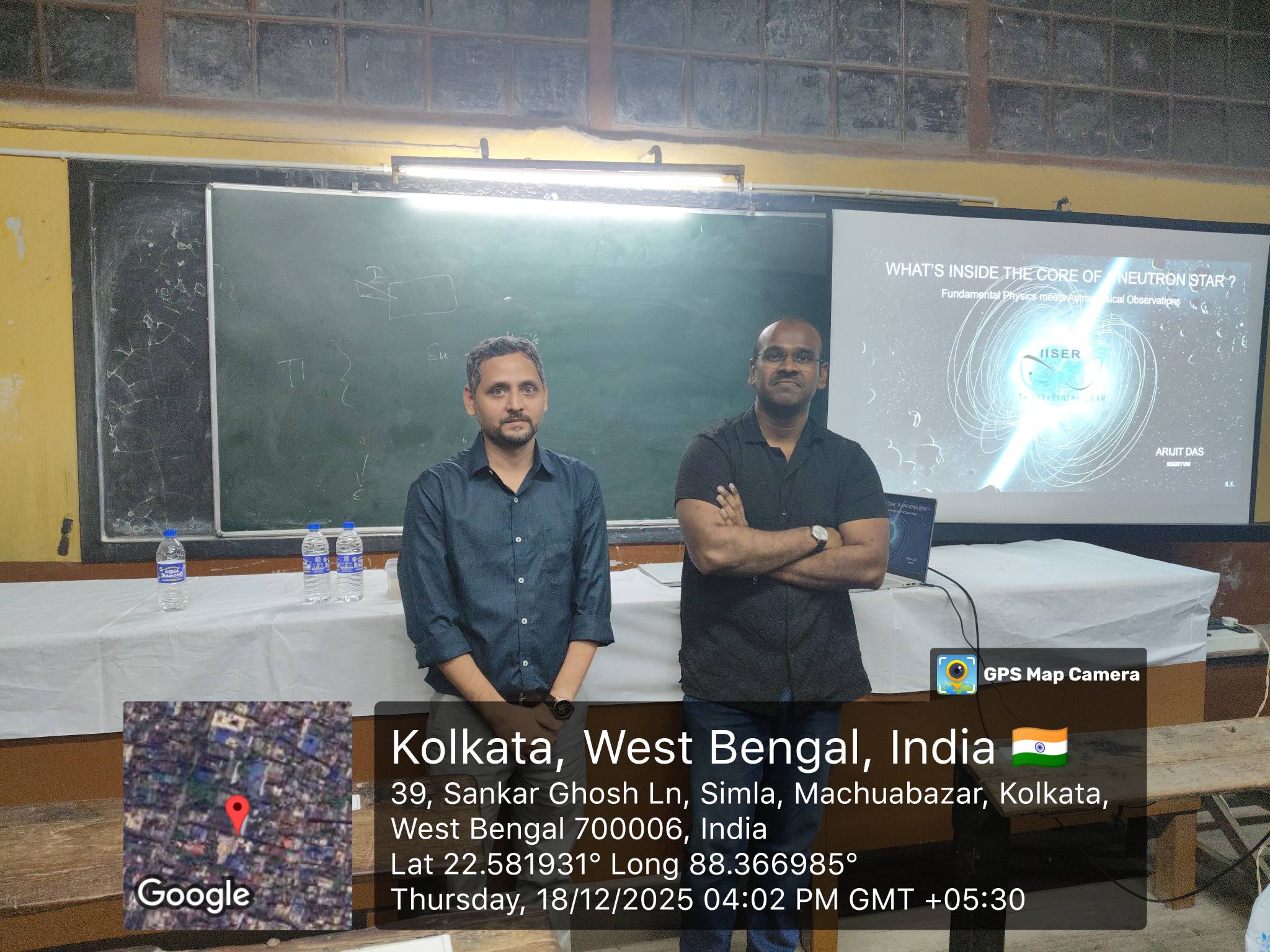
Arijit Das
Doctoral Fellow, IISER-Thiruvanantapuram
Title :Effects of a Brueckner-Hartree-Fock–corrected effective mass on speed of sound, conformality, and observables of dark matter–admixed neutron stars
Abstract : We construct an equation of state describing cold and dense matter in the core of neutron stars which includes an admixture of fermionic dark matter and incorporates nucleon effective masses derived from the relativistic Brueckner–Hartree–Fock (BHF) many-body approach within a relativistic mean-field model. Such a BHF-informed mixed-model approach increases stellar compactness, with mass-radius configurations which are consistent with smaller, lighter pulsars. The model displays the expected non-monotonic behaviour of sound speed hinted at by neutron-star data and is closer to the conformal bound at maximum mass. We find that the model displays tension with bounds on heavier pulsars, suggesting that the hypothesis of an aggregated dark component in neutron stars needs further critical study. Extensions to finite-temperature cases relevant for proto-neutron stars and the implications of strong magnetic fields are also discussed.
Md Aquib Molla
Doctoral Fellow, Vidyasagar College, Kolkata
Title :Does Being Selfish Always Help?
Abstract : We study a simple spatial model to examine when selfish behavior helps or hinders a population competing for limited resources. Agents move randomly on a one-dimensional periodic lattice and compete for renewable food. Each agent adopts one of two strategies: cooperation, in which food is shared among agents at a site, and selfish exploitation, in which a single agent monopolizes the resource. Strategies are adaptive and may change due to local competitive pressure and unsuccessful exploitation.
Starting from random initial conditions, the system evolves toward a long-time statistical steady state. At low agent density, cooperation dominates as resources are relatively abundant. As density increases, selfish behavior becomes more prevalent and suppresses cooperation. However, cooperation never disappears completely, even at high densities. Spatial crowding and stochastic strategy switching prevent selfish agents from fully dominating the system, leading to stable coexistence rather than absorbing states.
Overall, the model demonstrates that selfish behavior does not always confer an advantage in resource-limited environments and highlights the crucial role of spatial interactions in shaping collective outcomes.